PRESSURE POINTS
How the pressure of New York shapes people before they shape culture.
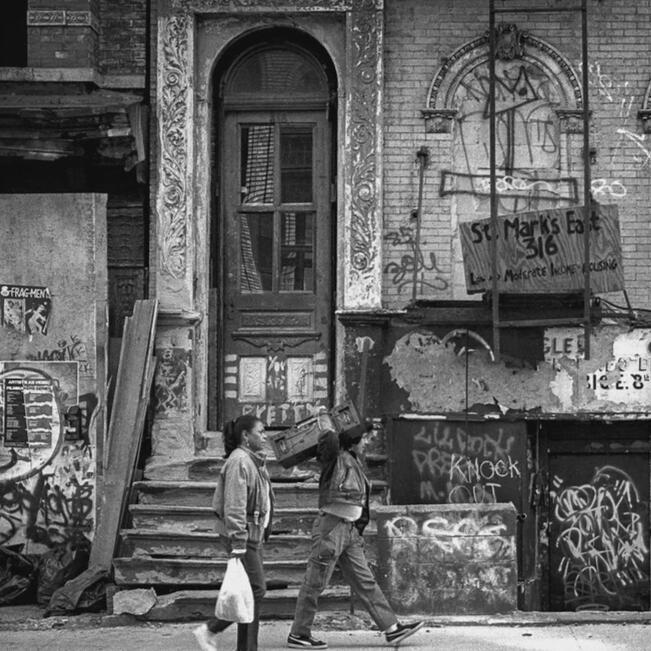
A small creative research project exploring how people in New York navigate pressure — and how their quiet adaptations slowly become the cultural forms that define the city. This site introduces the project’s early inquiry, the first phase of work, and the reflective approach guiding it.
I am developing a small creative research project about how the pressures of New York shape people before those people go on to shape the city’s culture.Across the city’s history, people have lived with many forms of intensity — economic strain, crowded space, migration, uncertainty, the emotional noise of daily life. I’m interested in the quiet ways people respond to that pressure: the rituals they build to stay centered, the improvised ways they gather, the small expressions that help them make meaning out of difficulty. These responses often look ordinary, but over time they can harden into the styles, scenes, and cultural forms we later recognize as “New York.”This project treats New York as a room large enough to hold past, present, and emerging futures at once. I’m looking at how pressure has felt in different eras, how people adapted, and how those adaptations slowly became recognizable culture — and pairing that with what people are feeling and inventing now. Here, creativity is not a luxury; it is a way of staying intact, of holding onto identity and possibility when life feels compressed.Phase 1 of the project is intentionally modest. I will create a short creative research booklet that develops in three stages. The first stage, which this grant would support, is a “fragment booklet”: a 6–10 page PDF of early field-note fragments, one or two conceptual sketches, and a few micro-archive moments tracing how pressure has turned into expression in selected corners of New York. It will be incomplete by design — more like the opening pages of a notebook than a finished book — but it will clearly show the project’s identity, tone, and line of inquiry.Your support would make it possible for me to spend focused time walking, listening, reading, and gathering the fragments that will begin this work. The aim is not a grand statement about the city, but a small, attentive study of how people live with pressure and quietly turn it into culture. My hope is that the work feels humble, observant, and emotionally honest — an invitation into a reflective space that begins small and human-scale, and has room to grow with care.
Phase 1 — Fragment Booklet (3 Months)
Phase 1 focuses on gathering early fragments, field notes, and small conceptual sketches that will shape a 6–10 page exploratory booklet. This stage is intentionally modest, centered on walking, observing, reading, and assembling the first textures of the project.
Timeline
Phase 1A unfolds over three quiet, attentive months. The first month is spent walking, observing, reading, and gathering early field notes. The second month deepens the work through continued notes, early sketches, and the gentle sorting of emerging themes. In the third month, I arrange the most resonant fragments into a 6–10 page exploratory booklet — letting the project’s early identity surface with care.
Budget
Phase 1A requires only a modest budget, mainly to create the time and focus needed to gather the early fragments that will shape the first booklet. Support from this grant would allow me to spend dedicated hours walking, observing, taking field notes, and beginning the quiet research that underpins the project. The grant essentially creates a pocket of protected time — enough to collect the fragments, sketches, and reflections that will form the exploratory booklet at the heart of Phase 1A.
About the creator
I’ve spent many years working in creative fields — shaping stories, designing experiences, and paying close attention to how people move through the world. My work has taken me through different roles in Europe and New York, across design, visual communication, and creative development, but the core of it has always been observation. I’m drawn to the small human gestures that reveal how people adapt to pressure, make sense of uncertainty, and express themselves in subtle, meaningful ways.This project grows out of that long-standing curiosity. It reflects an ongoing interest in the emotional texture of everyday life and in the quiet moments that eventually shape a place’s cultural identity. My approach is steady and attentive: listening, noticing, and gathering the fragments that show how people live, create, and stay connected to themselves.
Contact
[email protected]